
Live Aquarium Plants: Benefits & Best Easy Plants for Beginners
, by Elmarie Seymour, 8 min reading time
, by Elmarie Seymour, 8 min reading time
Live plants clean the water, fight algae and give fish shelter. The easiest plants for beginners, how to plant them, and what they need to keep growing.
Updated October 2026 · Written by the Dorry Pets team in Centurion
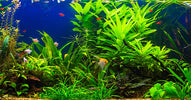
Live plants are one of the easiest ways to make an aquarium healthier and better looking. They soak up fish waste, help keep algae down, give fish places to hide and make a tank look natural. And you don't need CO2 or expensive equipment to start: many beautiful aquarium plants grow happily in a normal tank with a basic LED light.
This guide covers why live plants help, the easiest plants for beginners, and what they need to keep growing.
These plants grow in most freshwater tanks with standard lighting and no CO2, which makes them a reliable choice for a first planted tank:
| Plant | Where in the tank | Why it's easy |
| Java moss (Taxiphyllum barbieri) | On wood and rocks | Grows in low light, needs no soil, and shrimp and baby fish love it |
| Anubias nana | Foreground, tied to wood or rock | Almost indestructible, low light, and most fish won't eat it |
| Java fern (Microsorum pteropus) | Midground, tied to wood or rock | Low light, very hardy and long-lived |
| Cryptocoryne wendtii | Foreground to midground | Low to medium light and slow, steady growth once settled |
| Amazon sword (Echinodorus) | Background centrepiece | Big, bold leaves. Feed the roots and it thrives |
| Water wisteria (Hygrophila difformis) | Background | Fast-growing, soaks up nutrients and helps beat algae |
| Hygrophila polysperma | Background | One of the hardiest stem plants and quick to fill a tank |
| Ludwigia repens | Midground to background | Easy stem plant that turns red under good light |
| Rotala rotundifolia | Background | Soft, bushy stems with pink tips under stronger light |
| Marsilea hirsuta | Foreground carpet | One of the easiest carpeting plants, with no CO2 needed |
Our plant stock changes regularly as new batches arrive. See everything currently available in our live aquarium plants range.


Java moss and Amazon sword: two of the easiest plants to start with.
Plants fall into a few groups, and each one goes in differently:
Rinse new plants in dechlorinated water before planting, and check them for snails if you don't want any.
Most easy plants are happy with a good LED light on for 6–8 hours a day. Use a timer so the day length is the same every day. Longer is not better: too much light is the most common cause of algae. If your current light came with a basic kit, a planted-tank LED such as the Aquael Leddy Slim Duo Sunny & Plant makes a big difference. Browse our planted tank lights.
Mosses, Anubias and Java fern don't need any substrate at all. Rooted plants such as Amazon swords and Cryptocoryne grow best in a nutrient-rich aquarium soil such as UNS Controsoil, or in plain gravel or sand with root fertiliser tablets pushed in near their roots. See our planted tank soils.
In a lightly stocked tank, fish waste won't feed plants fully. A weekly liquid fertiliser keeps stem plants growing and green. If leaves turn yellow, pale or see-through, read our guide to aquarium plant deficiencies. Browse plant fertilisers.
Every plant in the beginner list above grows without added CO2. CO2 injection speeds up growth and lets you keep more demanding plants, such as dense carpets and bright red stem plants. It's a great next step once you're comfortable. Have a look at our CO2 equipment.
Most community fish do best in a planted tank. Bottom-dwellers like Corydoras love open sand between plants (see our Corydoras care guide), and shrimp graze on the tiny food that grows on moss and leaves. Plants also help keep water quality stable, which matters most when something goes wrong, like overfeeding.
In South Africa, keep a heater running in winter. Most tropical plants slow right down when the water drops below about 20 °C on cold Highveld nights. During power cuts, a few hours without light won't harm your plants.
Java moss, Anubias, Java fern, Cryptocoryne wendtii, Amazon sword and Water wisteria. They all grow with basic lighting and no CO2.
No. Easy plants grow fine without it. CO2 is only needed for fast, high-light setups and more demanding plants.
Not for every plant. Mosses, Anubias and Java fern grow on wood and rock. Rooted plants do best in aquarium soil, or in gravel with root fertiliser tablets.
About 6–8 hours a day, on a timer. More than that usually grows algae, not plants.
Yes. Live plants clean the water, help prevent algae and give fish real shelter. Plastic plants only look decorative.
Many plants, especially Cryptocoryne, shed leaves while adjusting to a new tank. Leave the roots alone and new growth normally follows.
Planning a planted tank? Visit our Centurion store to see the plants in person, or contact us. Tell us your tank size and light, and we'll help you choose plants that will thrive.